Our areas of work
Building a knowledge base.
We systematically review the international state of research on urban digital twins in climate adaptation, analyse best practices in data sovereignty and data infrastructures, and derive from them criteria and recommendations for action.
Strengthening digital sovereignty and open source.
We organize the technical exchange between the real-world laboratories, record the open-source building blocks that are in use and can be reused, support collaboration with existing developer communities, and develop strategies so that software results are maintained beyond the project’s duration.
Connecting data.
We analyse the technical approaches taken by the real-world laboratories, develop a strategy for connecting to national infrastructures such as Spatial Data Infrastructure Germany (GDI-DE) and the National Research Data Infrastructure for Earth System Sciences (NFDI4Earth), and test data integration in prototypes – with feedback to standardization bodies.
Organizing exchange and networking.
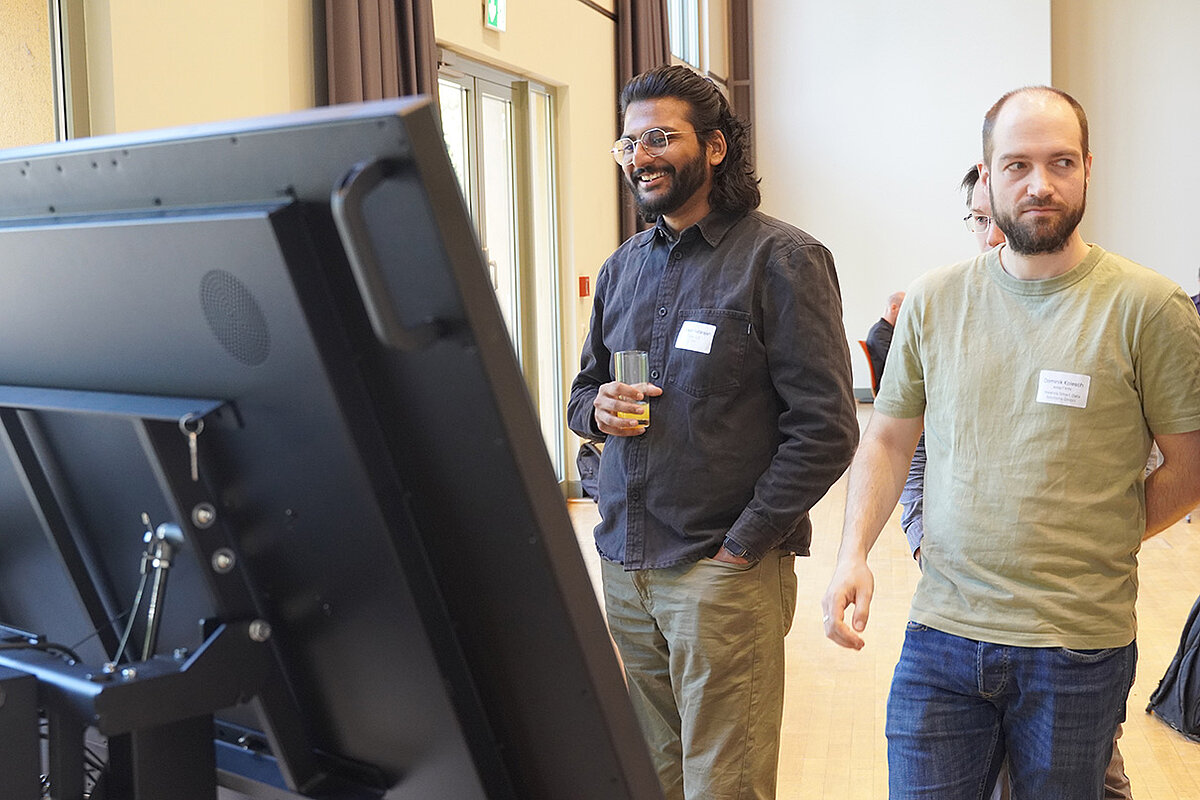
A kick-off workshop, a status seminar and a final conference, thematic discussion forums, working meetings and a digital dialogue platform create spaces for peer-to-peer learning – within the funding measure and beyond.
Accompanying and advising the real-world laboratories.
From the kick-off workshop and regular meetings to site visits and participation in events: we are in continuous dialogue with the projects, identify needs early and provide individual support.
Providing training.
We are developing a training offer for municipal and regional actors that can be used nationwide – modular in structure, close to practice and, as a digital self-study course, available after the end of the project as well.
Transferring knowledge.
We make the results visible and available for others to build on via the project website, the twice-yearly newsletter, concept and policy papers, academic publications, and appearances at conferences and in workshops.